Biography
Reshad Feild (born 1934 as Richard Timothy Feild) was an English mystic, spiritual teacher, musician and author. He wrote about twenty books on spirituality, the secret of breath and the inner essence of spiritual teaching. Since the 1970s, he has had a huge influence on thousands of western seekers after truth. He is father of three sons, among whom is the British actor JJ Feild [/].
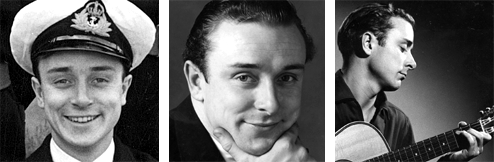
Photographs © Reshad Feild / Chalice Publishing
There are only a dozen or so English families whose established family tree can be traced as far back as Reshad Feild’s. His earliest known ancestor was Hubertus Hugh de la Feld, who came from near Colmar in Alsace and accompanied William the Conqueror to England in 1066. Another prominent ancestor, John Field (1522–1587), was the court astronomer and astrologer of Queen Elizabeth I.
Richard Timothy was born in Hascombe, Surrey, as the only son of the publisher Armistead Littlejohn Feild and Violet Esmé, a descendant of the wealthy brewery branch of the Bentley family. Neglected by his mother, “Tim”, as he was then called, was primarily raised by a Romani nanny, from whom he learned very early on “what it means to be loved” and discovered his “interest in wisdom”. As a young Englishman, he subsequently received a boarding school education at Eton, typical for the British upper class. When his mother remarried after his father’s early death, Tim refused to relinquish his ancestral family name, Feild, and also refused to resign from the Communist Party, to which he then belonged. As a result, at the age of twenty-one – as is only possible under the special English inheritance laws – he was completely disinherited and thus had to forfeit nothing less than one of the largest private fortunes in England at the time.
After serving in the Royal Navy for two years, he became a folk singer in the early 1960s and travelled the world as what, in those days, would have been called a “spiritual hippie”.
On his journeys, among else, he met up with a dervish brotherhood. This meeting was to bring about the beginning of a complete change in his life. After his return to England, he became involved with the teachings of G.I. Gurdjieff [/] and P.D. Ouspensky [/] whilst performing as a ‘singing waiter’ in a famous London restaurant called Luba’s Bistro, owned and run by Gurdjieff’s niece Luba (later portrayed by Reshad as “Sophie” in his book To Know We’re Loved) and frequented by many artist, celebrities and even royals of the time such as Princess Margaret [/] and her friends.
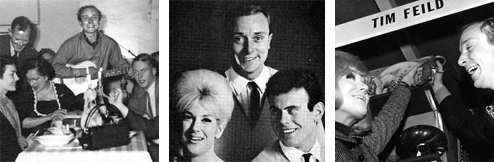
Photographs © Reshad Feild / Chalice Publishing
When he met Tom, the brother of the then still unknown singer Dusty Springfield [/], Tim’s career changed from folk singing to cabaret, radio and TV. Together, the three of them went on to form the vocal group The Springfields [/], which won an award as “the national vocal group of the year” in 1962 and, with the song Silver Threads and Golden Needles, became the first British band to reach the Top 20 in the USA and number one in the Australian charts.
Tim, however, left the trio after a short time to dedicate himself to further travels and the study of mystical and spiritual questions. He earned a living, among other things, as an antique dealer. The Springfields replaced him with singer Mike Hurst before the group finally disbanded when Dusty launched her own successful solo career.
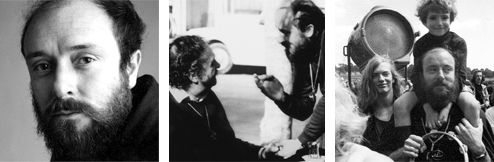
Photographs © Reshad Feild / Chalice Publishing
It was during that time that he met Pir Vilayat Khan [/], the Head of the Sufi Order International, who initiated him, gave him the name “Reshad” and later bestowed upon him the rank of a sheikh of that order. Thus, Reshad left the antique business and went on to help organise and run a spiritual teaching centre in Gloucestershire. This centre was set up on former Swyre Farm in Aldsworth and was close to Sherborne House, the spiritual school run by John G. Bennett [/], with whom Reshad maintained friendly relations.
The centre was named “Beshara” at the suggestion of the man who in the meantime had become Reshad’s most important spiritual teacher: Bulent Rauf [/], a Turkish-British author and translator who stemmed from a long ‘hidden line’ of Sufism going back to the Andalusian mystic Muhyiddin Ibn Arabi [/] (1165–1240). Reshad had met him in the autumn of 1970 in the antique shop of a friend, the well-known London art collector and interior designer Christopher Gibbs [/], on Elystan Street in Chelsea and called him “Hamid” in his first, autobiographical book The Last Barrier.
This book was eventually translated into many languages and remains one of the classics of modern spiritual literature. It tells the spellbinding story of Reshad meeting Hamid in a London antique store and the start of a journey which was to change the whole of his life. Some of the events at the Beshara centre are also described by Reshad’s companion at the time, the American jazz musician and journalist Rafi Zabor, in his own autobiographical book I, Wabenzi [/].
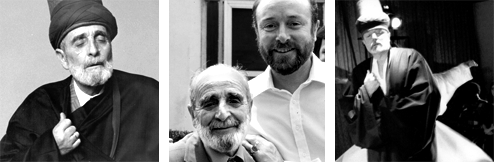
Photographs © Reshad Feild / Chalice Publishing
In December 1971, at the suggestion of Bulent Rauf, Reshad and a group of students travelled to Konya in Turkey to study the sacred ceremony of the Mevlevi Sufi order, also known as “the whirling dervishes”, dating back to the Persian mystic and poet Jalal ad-Din Rumi [/] (1207–1273). During this visit, Reshad became friends with Sheikh Suleyman Dede [/], the highly revered long-time cook of the Mevlevi tekke or lodge in Konya, who eventually initiated him into the inner spiritual essence of Rumi and whom he would later invite to California.
In 1973, Reshad resigned from his leading role at the Beshara centre and was instructed by Bulent Rauf to go to Vancouver in Canada, where he started a teaching centre. Later, further centres were set up in California, Colorado and Mexico. In all these centres, Reshad assisted in introducing the Sema ceremony, the sacred “turning” of the Mevlevis, which later was declared a cultural world heritage [/] by Unesco in 2008.
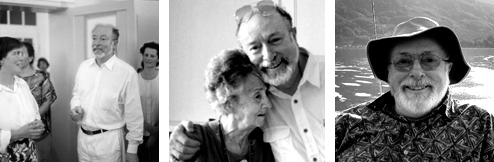
Photographs © Reshad Feild / Chalice Publishing
In the early 1980s, Reshad moved back to Europe, where he established and supervised a large teaching centre called Johanneshof at the Lake of Lucerne in Switzerland. Johanneshof became internationally known and, until its disbandment in 1996, received hundreds of people from many nationalities in its brotherly community, helping them on their individual search for the meaning of life.
In the course of time, Reshad’s teaching more and more abandoned outer form, although he never ceased to highly respect all authentic traditions. Always focussing on the inner essence, he regarded form and labels as mere suitcases which may be necessary on parts of the journey but which can be left behind when the seeker resolutely advances.
He thus consistently followed in the direction which Bulent had shown him through the words:
We are not involved with religion or with form. We are involved with the inner meaning, the inner stream of truth that underlies all religion. Our way is not a way for those who cannot go beyond form. It is for those who wish to go straight to essence.
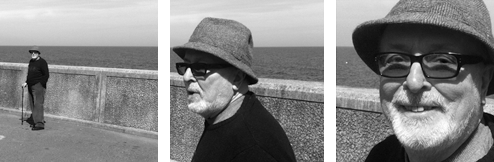
Photographs © Robert Cathomas & Helga Jacobsen
In his last years, Reshad led a secluded life in England, where he continued to write and advise seekers of what he called “the Way of Love, Compassion and Service”. When asked which spiritual tradition or line this way follows, he said,
We seek for knowledge, but knowledge is not mere information. It is the knowledge of oneself. “He who knows himself knows his Lord.” Little by little we have to discard all the labels and baggage that appear to have supplied our needs in the past, for there is only one Absolute Existence. In this sense we are just People of the Way.
Reshad passed away on 31 May 2016 in Devon. His ashes were scattered over the river Dart, where he loved to walk and sit during the last years of his life.